GP Tools
This page provides practical gastroenterology tools and referral resources for general practitioners. It includes quick-reference calculators, patient information links and guidance to support assessment of common gastrointestinal and liver presentations in primary care.
How to refer
Please feel free to contact me if you have a patient question. Referrals can be sent using the details to the right, and urgent referrals are welcome.

Calculators
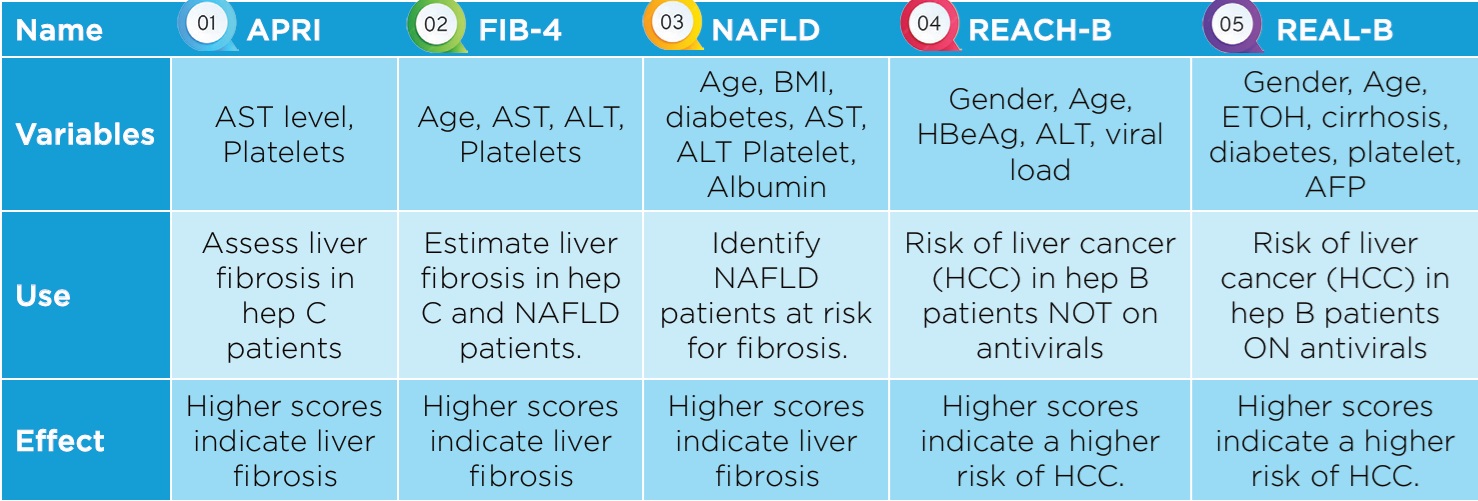
These are commonly used calculators for patients with liver disease and hepatitis. The overview shows what information is required for each calculator and when it may be helpful.
1: APRI Calculator
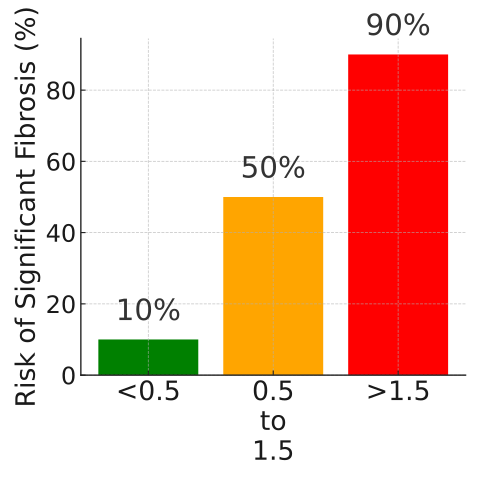
The Aspartate Aminotransferase to Platelet Ratio Index (APRI) is a useful, non-invasive tool for estimating liver fibrosis, particularly in patients with hepatitis C. It uses AST and platelet count to provide a quick estimate without requiring a liver biopsy. Scores <0.5 suggest a low likelihood of significant fibrosis, 0.5–1.5 is indeterminate and may require FibroScan or further assessment, and >1.5 suggests a higher likelihood of advanced fibrosis. Click to go to calculator
2: FIB-4 Score
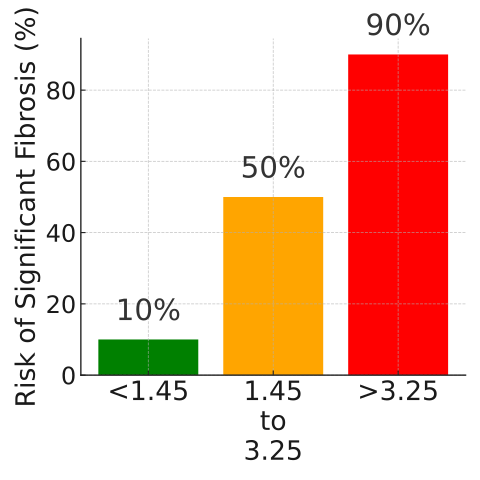
The FIB-4 Score is a widely used, non-invasive tool for estimating liver fibrosis in patients with chronic liver disease, including hepatitis B, hepatitis C and fatty liver disease. It uses age, AST, ALT and platelet count. Scores <1.3 usually suggest low risk of advanced fibrosis, 1.3–2.67 is indeterminate and may require FibroScan or further assessment, and >2.67 suggests higher risk of advanced fibrosis. Click to go to calculator
3: NAFLD Fibrosis Score
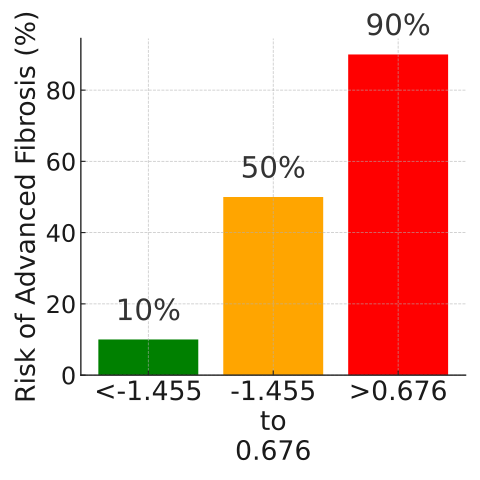
The NAFLD Fibrosis Score helps estimate the likelihood of advanced fibrosis in patients with non-alcoholic fatty liver disease, also called MASLD. It uses routine clinical and laboratory information, including age, BMI, diabetes status, AST/ALT ratio, platelet count and albumin. Scores <-1.455 suggest low risk, -1.455 to 0.676 is indeterminate and may require FibroScan or further assessment, and >0.676 suggests higher risk of advanced fibrosis. Click to go to calculator
4: REACH-B score
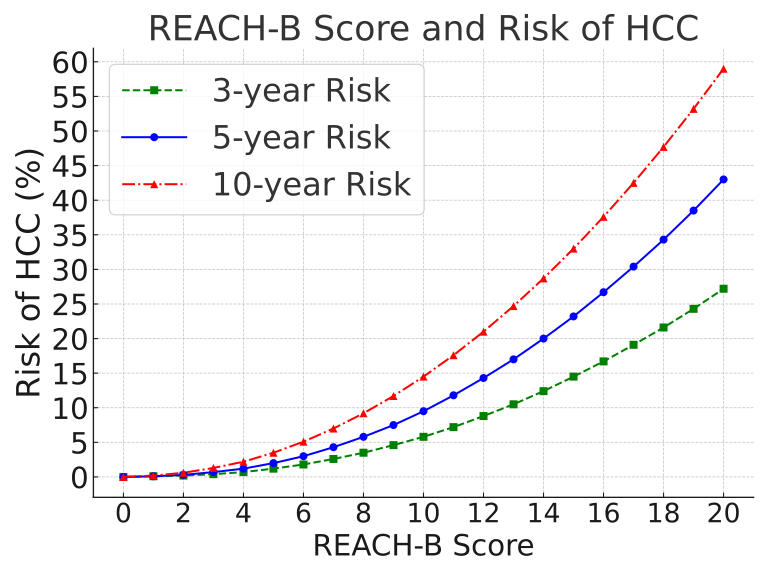
The REACH-B Score estimates the risk of hepatocellular carcinoma (HCC) in patients with chronic hepatitis B. It uses age, sex, ALT, HBeAg status and hepatitis B viral load. It can help support long-term surveillance decisions, but antiviral treatment decisions should still be based on standard hepatitis B treatment criteria. Click to go to calculator
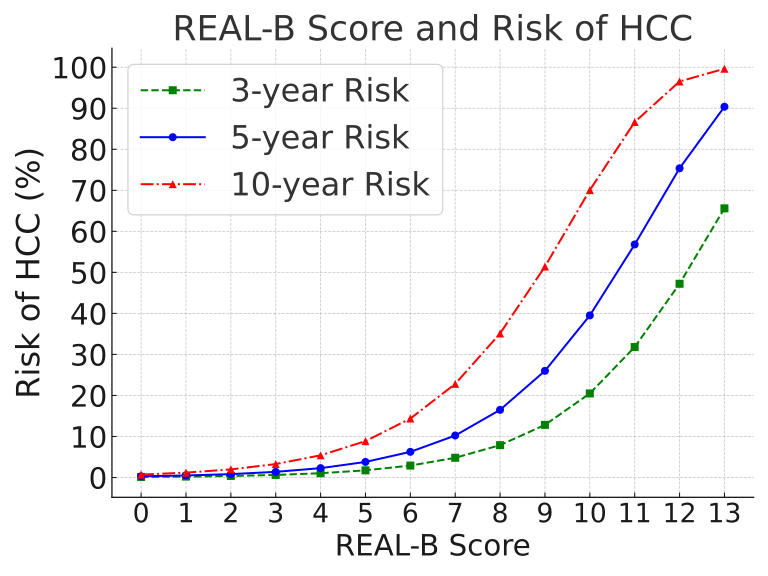
5: REAL-B Score
The REAL-B Score estimates hepatocellular carcinoma (HCC) risk in patients with chronic hepatitis B receiving antiviral treatment. It includes factors such as age, sex, cirrhosis status and treatment history, and can help guide the intensity of ongoing HCC surveillance. Click to go to calculator